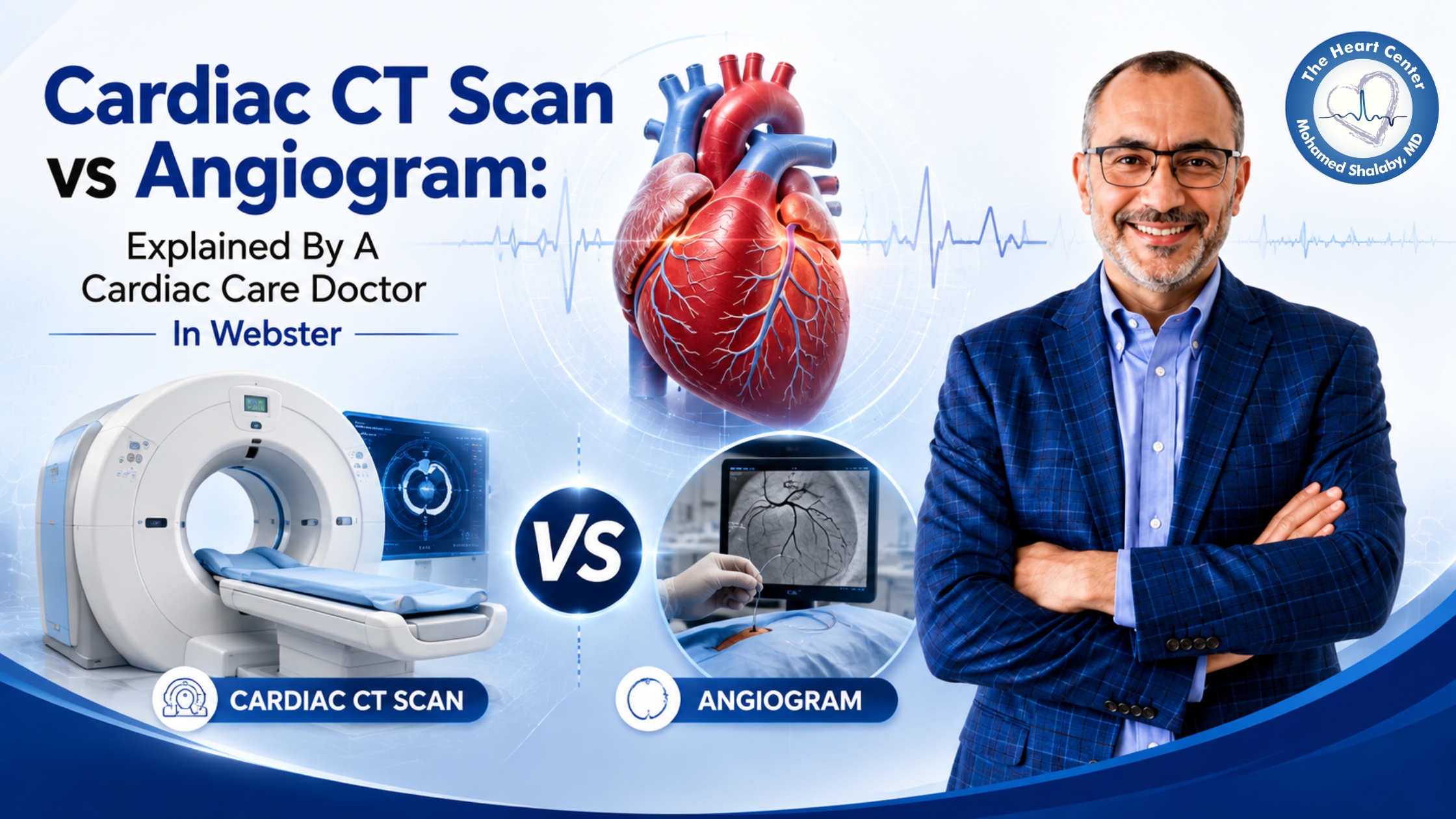
Heart imaging plays a vital role in detecting coronary artery disease before it leads to serious complications. However, many patients are unsure about the difference between a cardiac CT scan vs angiogram and when each test is recommended. While both evaluate the heart and coronary arteries, they differ in how they’re performed and the information they provide.
In this guide, Dr. Shalaby, a trusted cardiologist in Webster TX, explains how these diagnostic tests work, who may benefit from them, and how the right choice can support earlier diagnosis and better heart health.
Why Understanding Cardiac CT Scan vs Angiogram Matters
Heart disease can develop gradually without noticeable symptoms. According to the Centers for Disease Control and Prevention (CDC), heart disease is the leading cause of death in the United States, causing about 1 in every 5 deaths. Because coronary artery disease may remain hidden until it becomes serious, early detection plays an important role in prevention and treatment.
However, not every patient needs the same heart test. A patient with mild chest discomfort and moderate risk factors may benefit from a CT cardiac screening test, while someone with severe symptoms or suspected major blockage may require a cardiac angiogram. The decision depends on factors such as:
- Age and overall health
- Family history of heart disease
- Cholesterol levels
- Blood pressure
- Diabetes history
- Previous cardiac test results
- Current symptoms
What Is a Cardiac CT Scan?
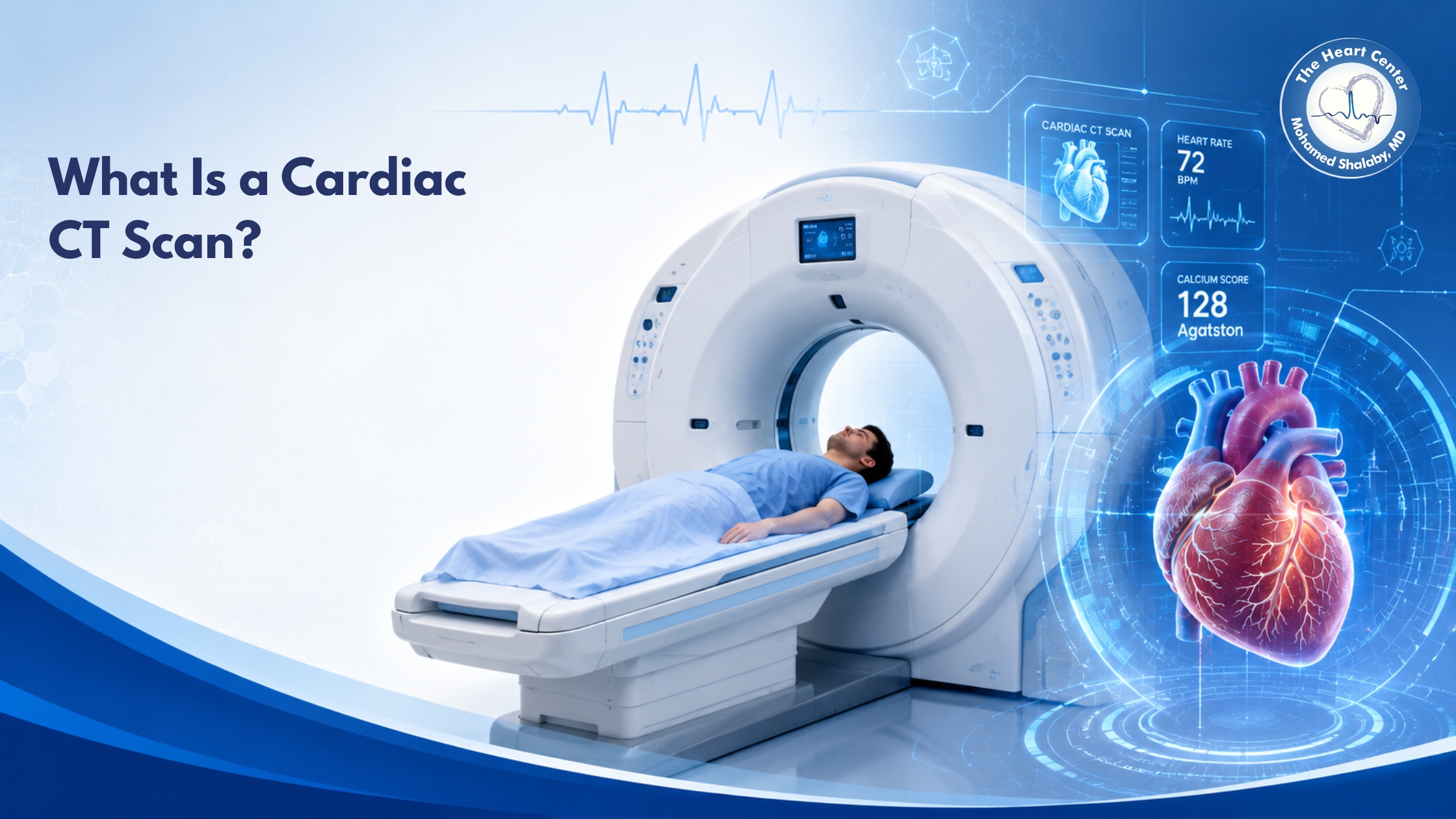
A cardiac CT scan is an advanced imaging test that uses computed tomography technology and contrast dye to create detailed images of the heart and coronary arteries.
Unlike traditional invasive procedures, a cardiac CT scan does not require inserting a catheter into an artery. During the test, a specialized CT scanner captures images of the heart while contrast material highlights the coronary arteries. This allows a Cardiac CT doctor to evaluate:
- Plaque buildup inside arteries
- Coronary artery narrowing
- Calcium deposits
- Early signs of coronary artery disease
- Overall coronary artery structure
Many patients searching for a cardiac CT scan near me are looking for a reliable way to evaluate heart health without undergoing an invasive procedure.
A cardiac CT scan is especially useful for patients who have:
- Stable chest pain
- Unknown cardiovascular risk
- Family history of heart disease
- Elevated cholesterol
- High blood pressure
- Diabetes
- Abnormal preliminary heart tests
The American College of Cardiology (ACC) recognizes coronary CT angiography as an important diagnostic option for evaluating patients with stable chest pain.
What Is a Cardiac Angiogram?
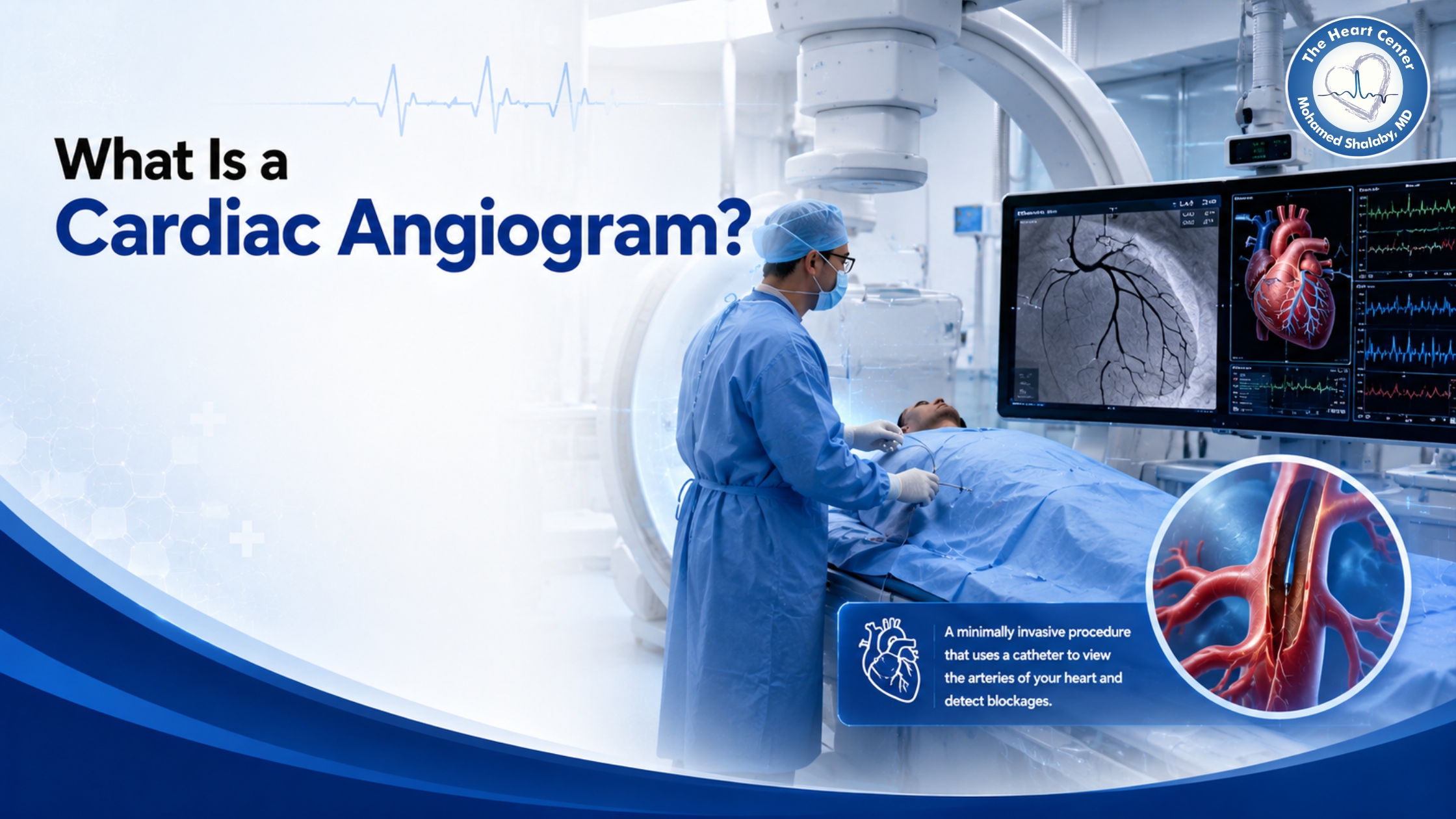
A cardiac angiogram is an invasive heart imaging procedure used to examine the coronary arteries and identify blockages. During an angiogram, a cardiologist inserts a thin catheter through an artery in the wrist or groin. The catheter is guided toward the heart, and contrast dye is injected into the coronary arteries. X-ray images then show areas where blood flow may be restricted.
Patients often ask: “Is an Angiogram the Same as a Heart Catheterization?”
Yes. A cardiac angiogram is performed as part of a heart catheterization procedure. A heart catheterization refers to the overall procedure, while the angiogram specifically refers to the imaging process used to visualize the coronary arteries.
Cardiac CT vs CT Angiogram: Are They the Same?
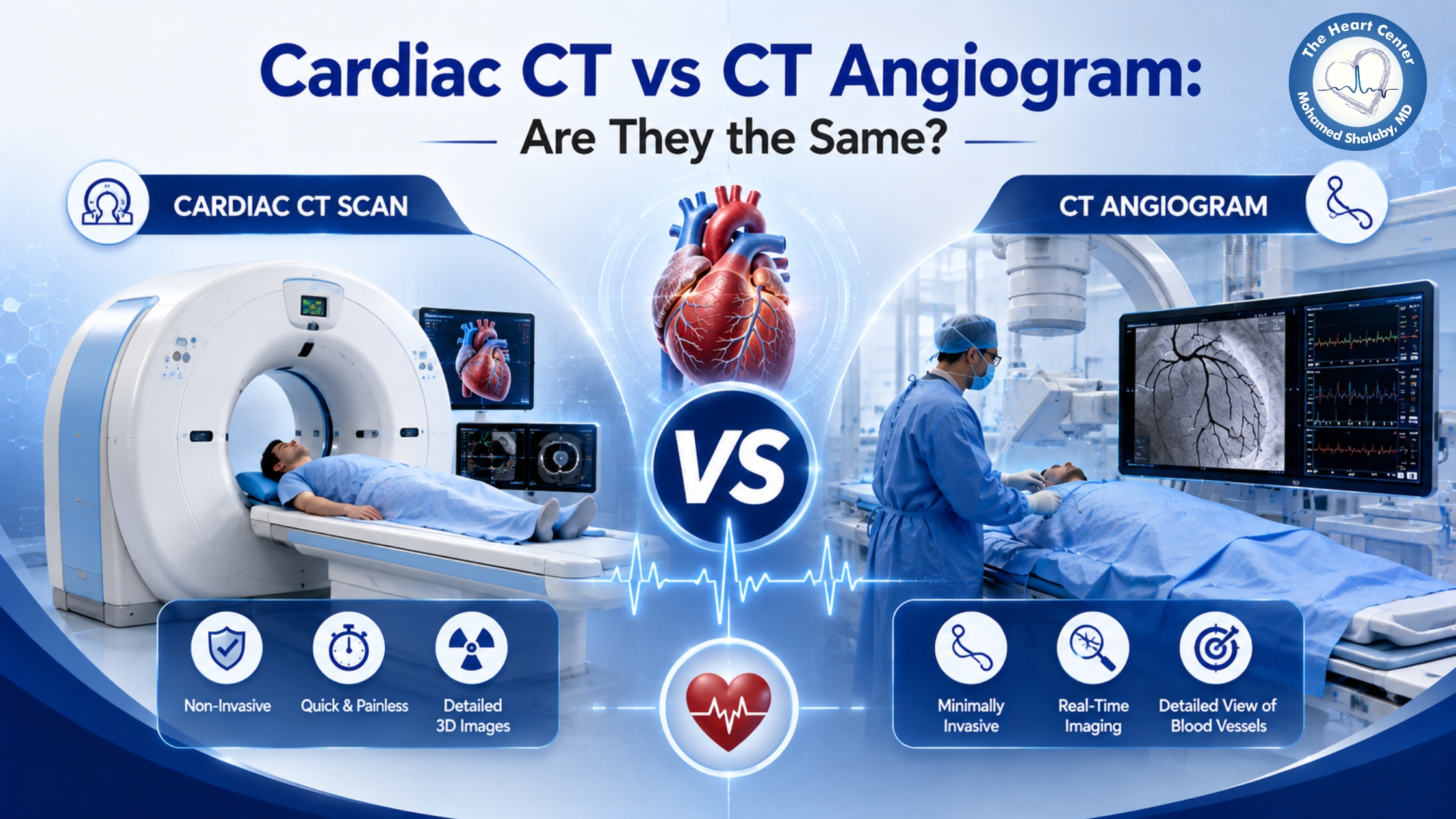
One common source of confusion is the difference between cardiac CT vs CT angiogram. Although these terms are closely related, they do not always mean the same thing.
A cardiac CT refers broadly to computed tomography imaging of the heart. It can include various scans, such as coronary calcium scoring and other structural evaluations.
A CT coronary angiogram (CCTA) is a specialized cardiac CT scan that uses contrast dye to create detailed images of the coronary arteries. It allows a cardiologist to identify plaque buildup, artery narrowing, and potential blockages.
In simple terms:
- A cardiac CT provides detailed images of the heart.
- A CT angiogram focuses specifically on the coronary arteries.
- Both are non-invasive compared to traditional cardiac catheterization.
For patients searching for a cardiac CT scan clinic, it is important to understand which type of imaging is being recommended and why.
Cardiac CT Scan vs Angiogram: Key Differences
| Cardiac CT Scan | Cardiac Angiogram |
| Non-invasive test | Invasive procedure |
| Uses CT imaging technology | Uses catheter and X-ray imaging |
| No catheter inserted into artery | Catheter inserted into blood vessel |
| Evaluates plaque and narrowing | Shows exact blockage location |
| Minimal recovery time | Requires recovery after procedure |
| Mainly diagnostic | Diagnostic and treatment-capable |
The best choice depends on the patient’s symptoms and cardiovascular risk profile. A cardiologist in Webster, Texas, like Dr. Shalaby, evaluates the complete picture before recommending the most appropriate test.
Which Test Is More Accurate: Cardiac CT Scan or Angiogram?
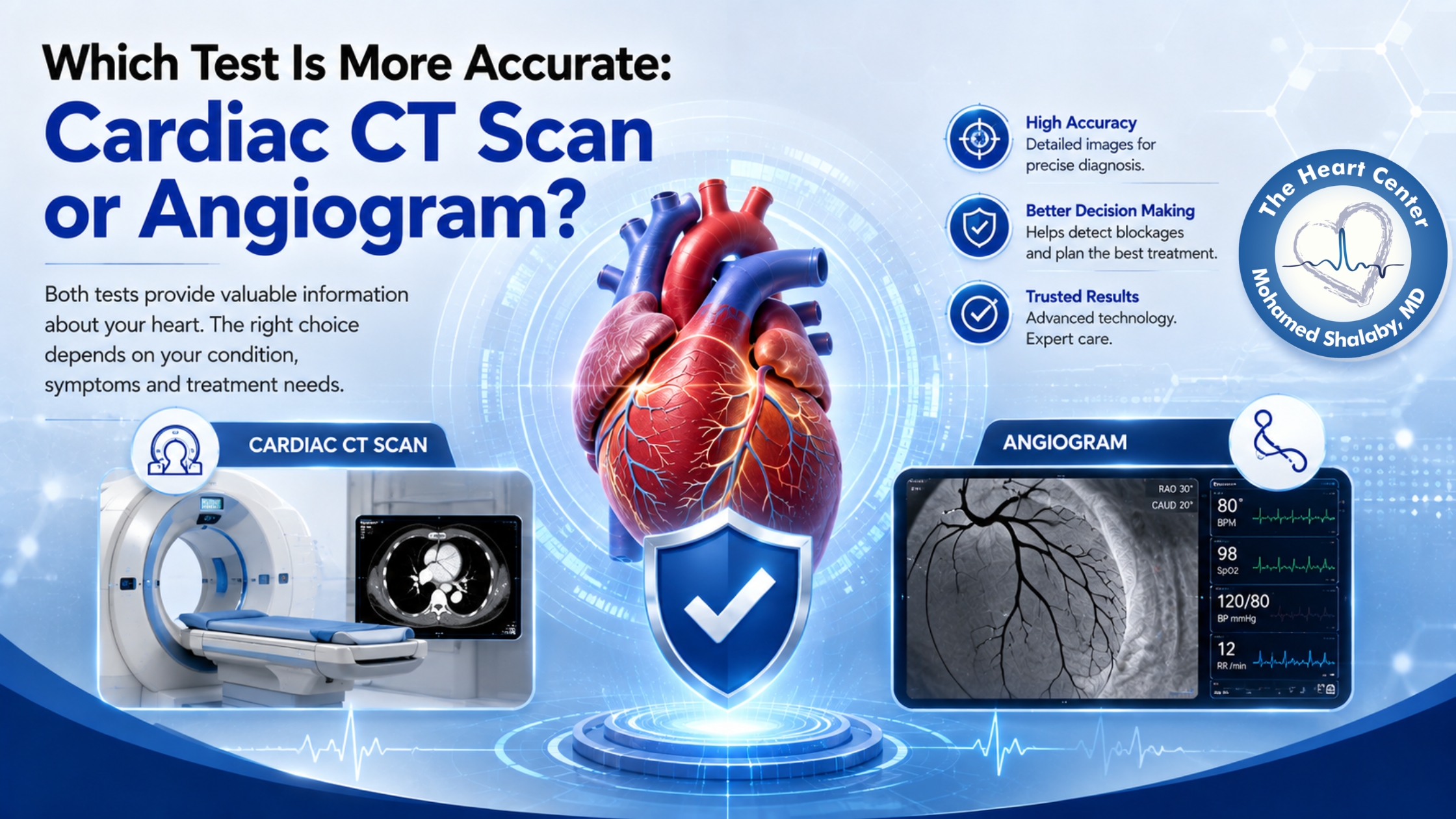
The answer depends on the patient’s condition.
A cardiac CT scan has become an important diagnostic tool because it can detect coronary artery disease without requiring an invasive procedure. It is especially useful for patients with a lower or intermediate risk of heart disease who need further evaluation. Research published by the National Institutes of Health (NIH) has shown that coronary CT angiography provides excellent accuracy for detecting coronary artery disease in appropriately selected patients.
However, a traditional cardiac angiogram remains the reference standard when doctors need the most detailed assessment of coronary artery blockages. An angiogram may be preferred when:
- Severe coronary artery disease is suspected
- A patient has ongoing chest pain
- Previous tests show concerning results
- A heart attack is suspected
- A stent or other intervention may be required
The key difference is that a cardiac CT scan helps diagnose problems, while an angiogram can diagnose and treat blockages during the same procedure.
When Does Dr. Shalaby Recommend a Cardiac CT Scan?
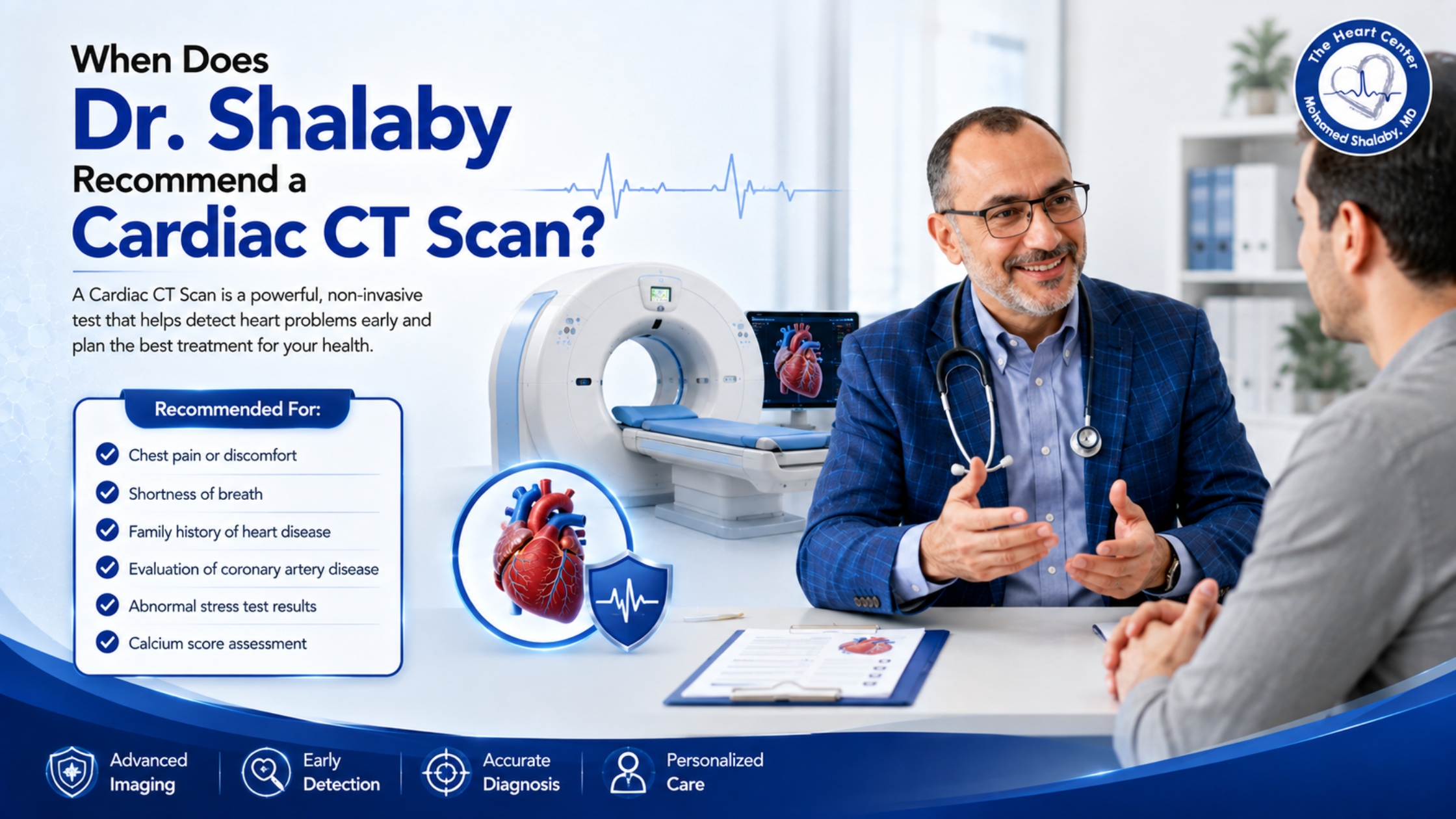
As a trusted cardiac specialist doctor in Webster, Dr. Shalaby evaluates each patient individually before recommending advanced heart imaging. A cardiac CT scan may be recommended for patients who have:
Chest Pain With Unknown Cause
Not all chest pain is caused by the heart. However, evaluating coronary arteries can help determine whether symptoms may be related to blocked arteries or plaque buildup.
Multiple Heart Disease Risk Factors
Patients with risk factors such as:
- High cholesterol
- High blood pressure
- Diabetes
- Smoking history
- Family history of heart disease
may benefit from early coronary evaluation.
Preventive Heart Screening
A cardiac CT scan can help identify early signs of coronary artery disease before symptoms become severe. This makes it valuable as part of preventive cardiology, especially for patients who want a clearer understanding of their cardiovascular risk.
Related service: Cardiovascular Health Screening
When Is a Cardiac Angiogram Recommended?
A cardiac angiogram is typically recommended when a cardiologist needs a direct view of the coronary arteries or suspects significant blockage. An angiogram heart test may be recommended for patients experiencing:
- Severe or persistent chest pain
- Symptoms suggesting a heart attack
- Abnormal stress test results
- Significant artery narrowing detected on previous imaging
- High risk of coronary artery disease
The procedure can also be used as part of an angiogram for heart procedure when treatment may be required. For example, if an angiogram identifies a major blockage, a cardiologist may perform:
- Balloon angioplasty
- Coronary stent placement
- Other interventions to improve blood flow
This ability to diagnose and treat during one procedure is one of the biggest advantages of cardiac catheterization.
Benefits of Cardiac CT Scan
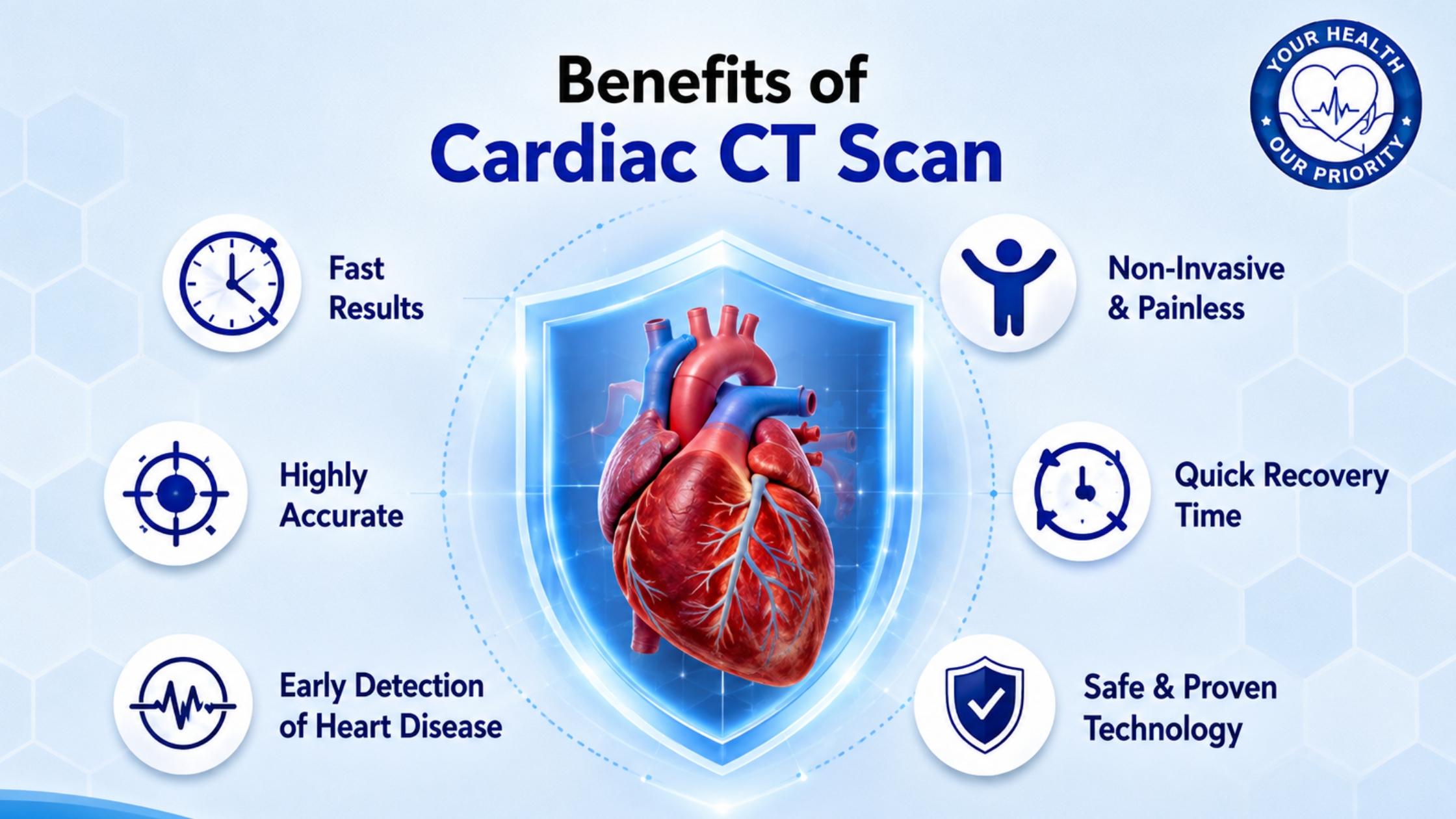
- Non-invasive procedure
- No catheter insertion
- Fast imaging process
- Detects early plaque buildup
- Helps evaluate coronary artery disease risk
Why Choose Dr. Shalaby for Cardiac Imaging in Webster, TX?

Choosing the right heart test starts with choosing an experienced cardiologist who understands your symptoms, risk factors, and long-term health goals. Dr. Shalaby provides comprehensive cardiovascular care for patients looking for a cardiologist in Webster, TX, including:
- Preventive cardiology evaluations
- Advanced cardiac imaging guidance
- Heart disease risk assessment
- Stress testing
- Echocardiography
- Cardiovascular screening
- Personalized treatment planning
With more than 25 years of cardiovascular experience, Dr. Shalaby focuses on helping patients understand their heart health and choose the right diagnostic approach. Whether you need a cardiac CT scan near me, a second opinion, or guidance about whether an angiogram is appropriate, expert evaluation can help you make a confident decision.
Schedule a Cardiac Evaluation With Dr. Shalaby!
Understanding the difference between a cardiac CT scan vs angiogram can help you take the next step toward better heart health. If you are experiencing chest discomfort, have cardiovascular risk factors, or need guidance about the right heart test, Dr. Shalaby can provide a personalized evaluation. Call Dr. Shalaby’s Cardiology Clinic today at 281-956-7070. Get expert guidance from a trusted cardiologist in Webster, specializing in preventive cardiology, advanced cardiac testing, and personalized heart care.